
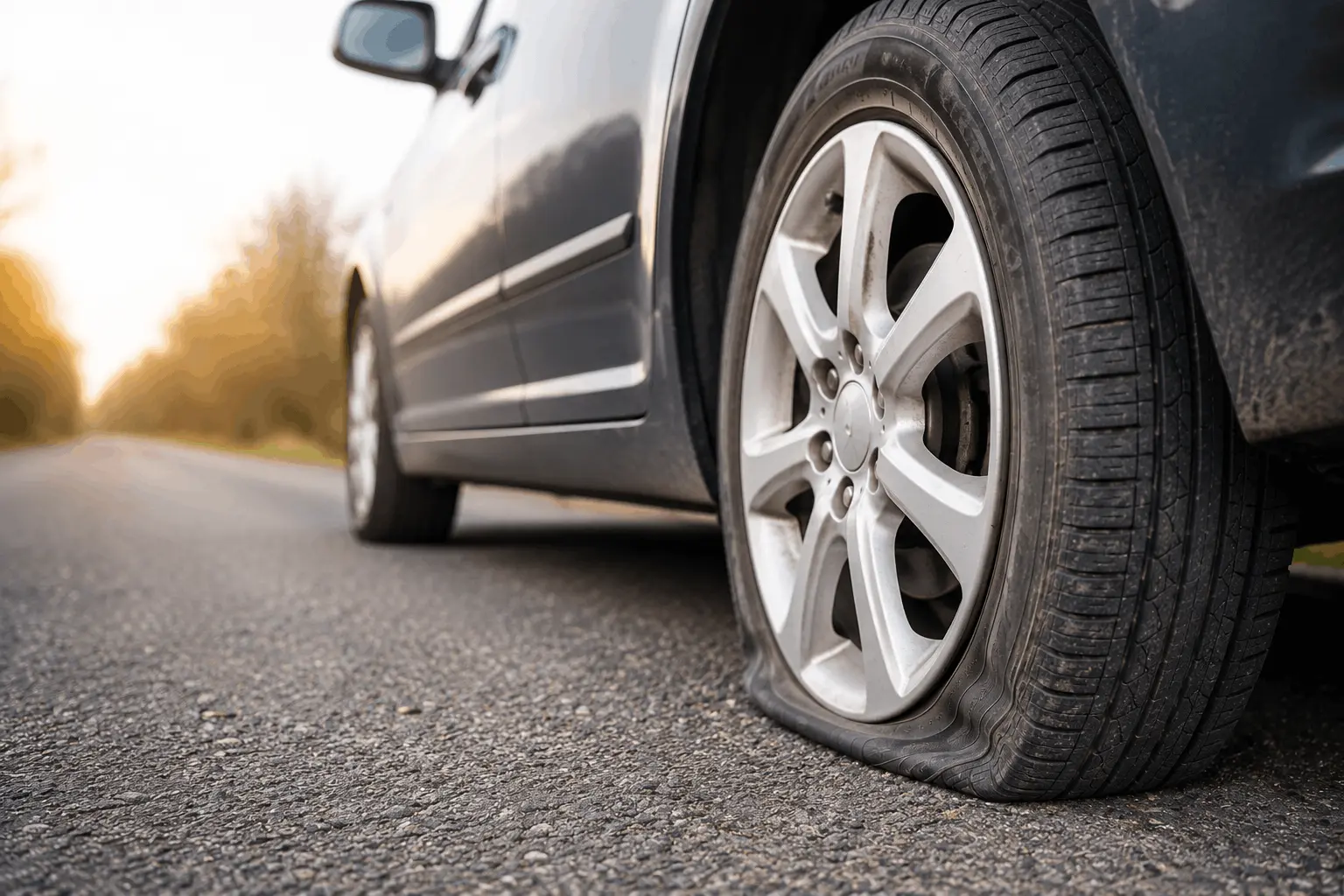
You should not drive on a flat tyre, as the safe distance is effectively zero. For specialised run-flat tyres, the limit is up to 50 miles at a maximum speed of 50mph. However, you should only drive a few hundred metres for standard tyres at walking speed, particularly to a safe point.
Driving on a flat or punctured tyre is considered unfavourable, even if the damage seems minor. A tyre with little or no air pressure cannot adequately support the weight of your car. This increases the risk of losing control, damaging the wheel assembly, and incurring additional costs. While some vehicles have run-flat tyres that allow limited driving after a puncture, it is crucial to repair or replace the standard tyres immediately.
How Far Can I Drive Without Damaging the Wheel?
You can drive a very short distance. It is suggested that you do not drive with a flat tyre. It is necessary to replace your flat tyres quickly.
When your vehicle has run-flat tyres, you can travel safely for 50 miles without exceeding the 50mph speed limit. It enables you to securely leave the highway and makes sure that your vehicle is out of traffic and danger.
Can You Drive on a Flat Tyre?
Various drivers ask this question when they are in an unprepared situation, such as a slow puncture or a slow air leak. Even though it seems appealing to make it home, driving a small distance can damage the tyre.
- Damages the internal structure of the tyre irreparably
- Affects your vehicle’s steering or braking
- Bends or cracks your wheel rim
If you drive with a punctured or flat tyre, you may require a tyre replacement, which is more expensive than a basic repair.
What Should You Do If You Get a Flat Tyre on the Road?
These points explain what to do if you face a sudden flat tyre while driving.
Keep Calm and Act Fast
If you face sudden punctures or air leaks in your vehicle’s tyres while driving. Hold the steering wheel tight, activate your hazard lights, let the car slow down on its own, and gently press the brakes only when you are moving slowly, as it prevents your car from sliding. Immediately turn your car to a secure place.
Tyre Repair or Replacement
Evaluate whether your tyre requires repair or replacement. You can replace it with a spare if available in the boot. When there is no spare tyre, you may need to call for a towing service and schedule a tyre replacement.
Pinpoint Your Nearest Tyre Garage
A spare tyre is available as a space-saver tyre or a full-size tyre. These tyres are not created for long-term use, but they still keep you safely on the road towards the nearest repair shop.
Does Roadside Assistance Change Flat Tyres?
Yes, roadside assistance can generally help you with a flat tyre. However, it depends on the situation and provider guidelines. Many roadside assistance providers can help you by replacing your flat tyre with a spare one if available and in good condition. It is the most common solution and can be done immediately, enabling you to keep driving unless the defective tyre can be repaired or replaced.
When your car does not have a spare tyre, some roadside assistance service providers may offer:
- Inflate the tyre if it has only lost air and is only slightly damaged.
- Briefly repair the puncture if it is safe to do so.
- Transfer your car to the closest tyre repair shop or garage if the tyre cannot be repaired on the roadside.
Various modern vehicles come with a tyre repair kit rather than a spare tyre. In such situations, an expert uses the repair kit if the puncture is appropriate for a temporary repair.
Can You Repair Run Flat Tyres?
Yes, run-flat tyres may be repaired occasionally, depending on the specific conditions. No matter if repair is possible or not, it depends on the level and location of the damage, as well as the factory instructions. When the tyre has a minor puncture in the tread area and has not been driven far on a flat tyre, an expert can easily repair it. A professional removes the rubber part from the metal wheel to identify any unseen risks.
However, a run-flat tyre cannot be repaired if:
- The puncture is in the tyre’s sidewall or shoulder.
- The puncture is too large to meet industry repair standards.
- The internal structure has been damaged due to heat or excessive flexing.
- It has been driven on with little or no air pressure beyond the manufacturer’s recommended limit.
Is it Illegal to Drive a Flat Tyre or a Punctured Tyre in the UK?
Yes, under UK law, driving with a flat tyre, a severely damaged tyre, or a tyre with tread below the legal limit is an offence. Penalties can reach up to a £2,500 fine and three penalty points per faulty tyre, and any tyre under the legal minimum of 1.6mm will also fail its MOT (Ministry of Transport).
Final Thoughts
Driving on a flat or punctured tyre is too dangerous. Run-flat tyres normally last up to 50 miles at a top speed of 50mph. Regular tyres can move a short distance to arrive at a safe location. If you continue driving with a deflated tyre, it may cause irreparable tyre damage, minimises vehicle control, and become more expensive. When you notice any warning signs of a flat or punctured tyre, stop on the side of the road, examine the damage, and consider consulting an expert if needed.
Need Help with a Flat Tyre?
If you’re dealing with a flat or punctured tyre and can’t continue your journey safely, Fast Recovery Services London is here to help. We provide 24/7 tyre support, and vehicle recovery across London. Call us: 07737234940 for fast, reliable assistance.